



The rapid adoption of AutoStore robotic storage systems in Canada demands precise floor conditions to ensure the seamless movement of autonomous robots. Achieving super-flat concrete slabs that meet stringent tolerances is the foundation of a successful AutoStore installation. This article discusses the required floor tolerances, applicable North American standards, and treatment solutions to ensure compliance.
Specific Grinding Recommendations for AutoStore Floor Tolerances
Achieving super flat and level floors is crucial for an AutoStore installation. Any unevenness can cause robot misalignment, increased wear and tear, and operational inefficiencies. Below is a step-by-step grinding strategy for bringing an existing concrete floor up to AutoStore’s required tolerances.
Pre-Grinding Floor Assessment
Before grinding, conduct a detailed floor survey using:
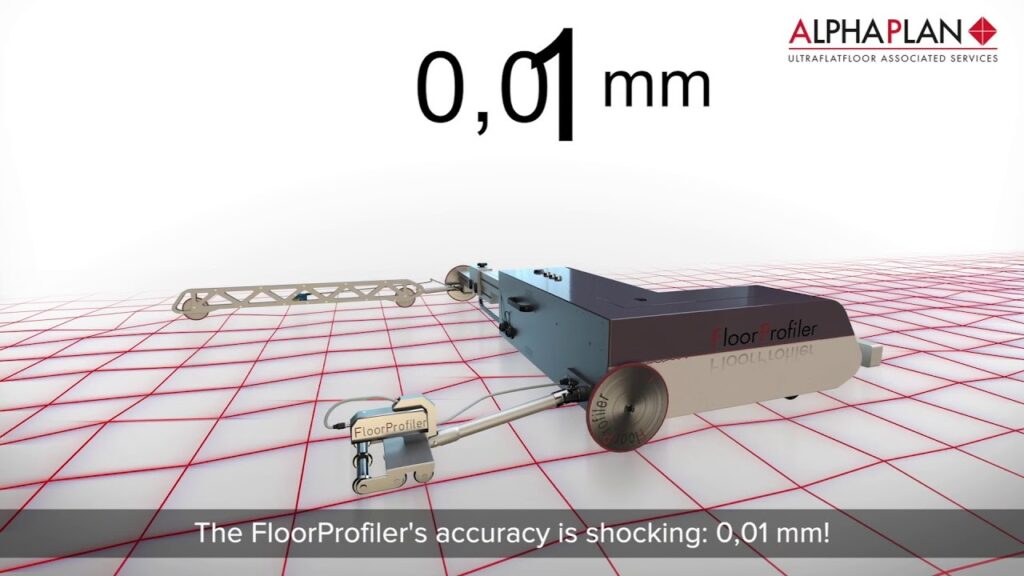
- Digital Profileograph (per DIN 15185, VDMA, or FEM 10.2.14-1).
- F-Numbers (Ff & Fl) measurement per ASTM E1155.
- Laser scanning (3D mapping for accurate surface profiling).
- Straightedge testing (3m straightedge for high/low spots).
➡ Target Tolerance: ±2mm over 3 meters (AutoStore specification).
Grinding Techniques Based on Deviation
Depending on the survey results, use the following grinding methods:
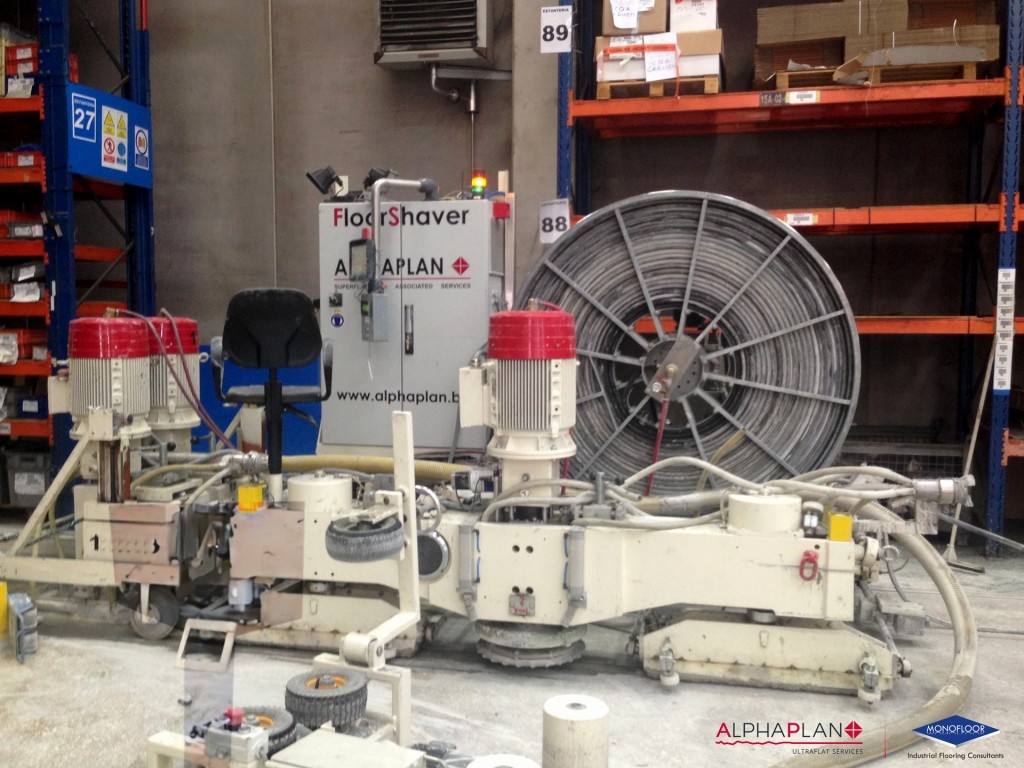
A. High-Precision Concrete Shaving (For Severe Deviations)
- Best for: Floors with deviations exceeding ±4mm.
- Method: Precise diamond shaving with a precision of 0.25 mm per pass. Continuous monitoring with profiler to maintain accuracy. Final smoothing passes for a seamless surface.
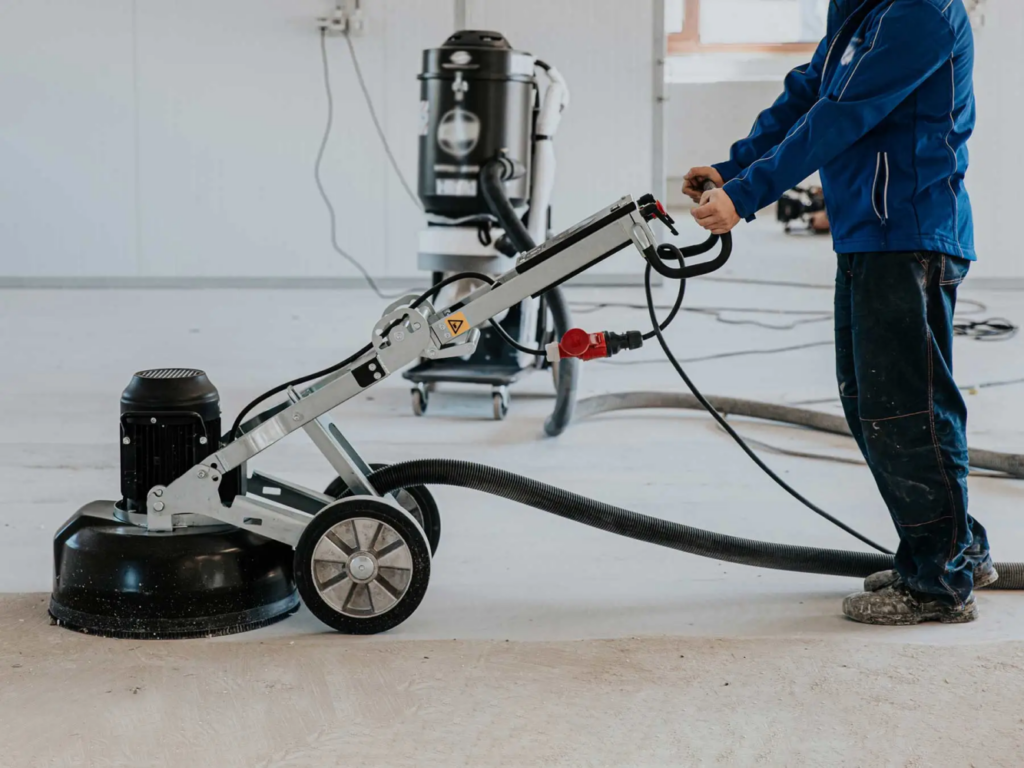
B. Superflat Grinding (For Moderate Deviations)
- Best for: Floors with ±2–4mm deviations.
- Method: Planetary head grinders with medium-grit diamond tooling. Micro-leveling adjustments with grinding passes—surface refinement with polymer densifiers for added strength.
C. Fine Grinding & Honing (For Minor Deviations)
- Best for: Floors within ±1–2mm but needing fine adjustments.
- The method involves fine diamond grinding (50–200 grit) to eliminate micro-irregularities. Resin-bonded polishing pads achieve an ultra-smooth finish. Penetrating sealers reduce dust and improve wear resistance.
Surface Hardening & Finishing
Once the desired flatness is achieved, apply:
- Concrete densifiers (e.g., Lithium Silicate-based densifiers) to harden the surface and prevent dusting.
- Anti-static coatings (if required by AutoStore specs) to reduce electrical discharge affecting robotic sensors.
- Matte or gloss finish (depending on operational needs).
Quality Control & Final Verification
After grinding, a QC check has to be performed to control outcome:
- Re-measurements with laser profiling tools.
- Straightedge testing (±2mm verification over 3m).
- F-Number certification (if ASTM E1155 compliance is required).
Alternative: Self-Leveling Overlay (If Grinding Isn’t Enough)
If grinding alone cannot achieve tolerances, apply:
- Superflat self-leveling overlays (Sika Schönox, Mapei Ultratop, TRU PC).
- Flowable micro-topping systems for seamless finish.
- Laser-screeded application for ultra-flat results.
Final Recommendation:
For optimal results, use a high-precision concrete shaver to guarantee precise results and control with the floor profiler in real time. Consider applying a self-leveling overlay if the floor requires more than grinding correction.
Do you have questions about achieving AutoStore-compatible floors? Would you like recommendations for specific grinding or a survey for this project? Contact Applied to discuss customized solutions for your facility!


