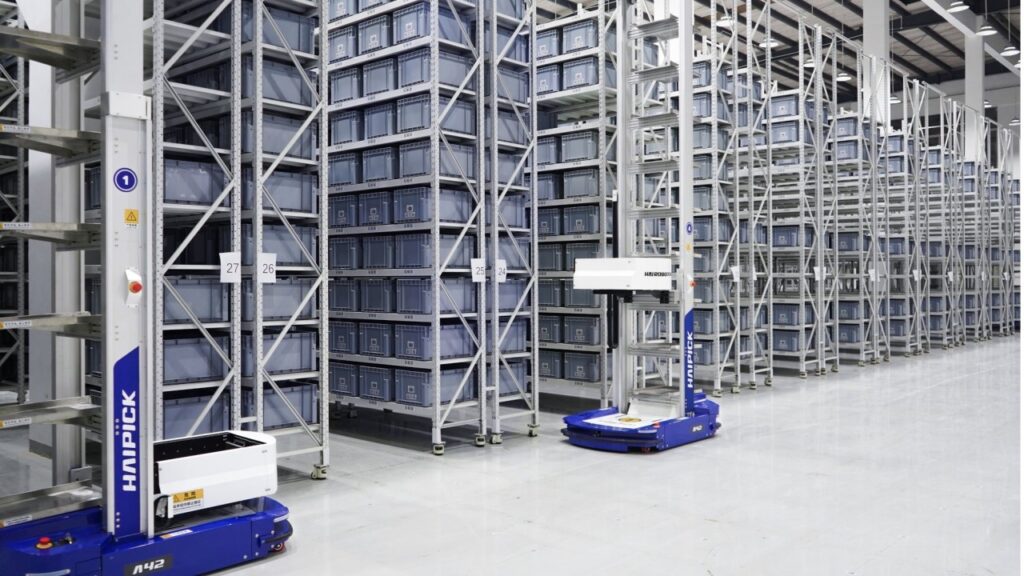
FF/FL, Fmin, TR34, VDMA, DIN 15185 and EN 15620 —
what warehouse owners actually need to understand before the equipment arrives
A warehouse floor can look perfectly flat. It can pass a concrete flatness test. It can even carry an impressive FF50/FL35 report… and a 40-ft VNA truck can still hate it.
That is because there is no single definition of a “flat warehouse floor.”
Different machines interact with concrete differently. A conventional forklift can travel almost anywhere. A VNA turret truck follows the same wheel tracks thousands of times. An AMR may cross the same joint every few minutes. An ASRS grid may depend on extremely consistent support elevations.
So before asking: “What floor-flatness standard do we need?” Warehouse operators should ask a much more important question:
“What equipment are we putting on this floor, how does it move, and what does its manufacturer require?”
That question changes everything. The underlying technical guide makes the same distinction: random movement, defined movement, and fixed automation can legitimately require completely different approaches within the same building.
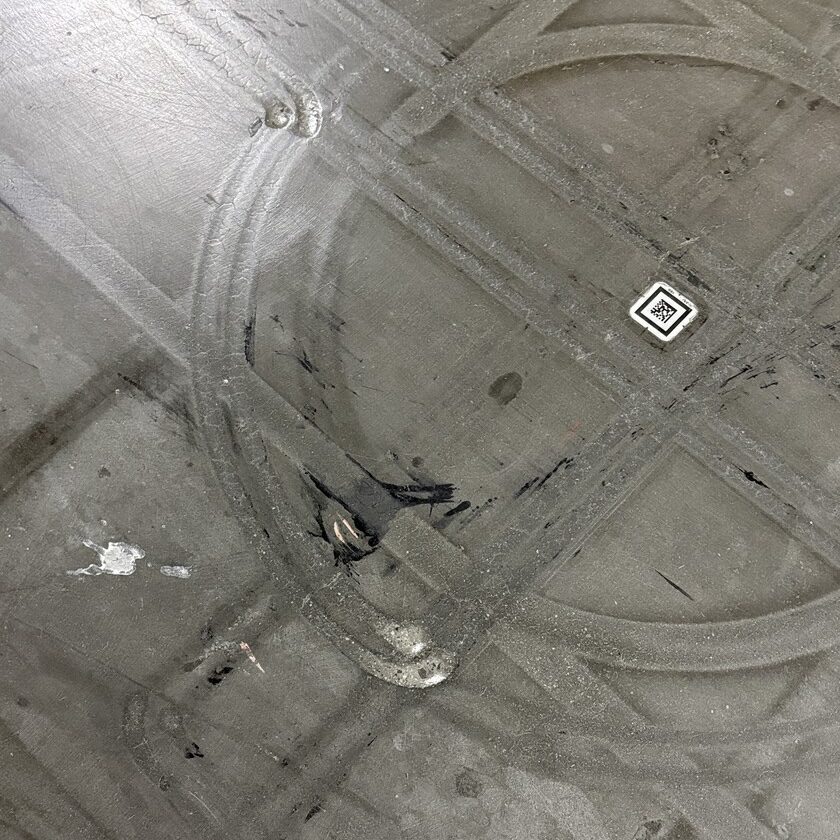
The floor is becoming part of the machine.
As warehouses become taller, faster, and more automated, tiny floor irregularities matter more. Consider a simple example.
A 1/8-in. difference between VNA wheel tracks may sound insignificant. But across a 59-in. track width, it creates about 2.12 mrad of cross-aisle tilt. At 45 ft of lift height, simple geometry projects that into roughly 1.14 in. of lateral displacement at the top of the mast — before the truck itself adds any dynamic movement.
Less than one-tenth of an inch at the floor can become more than an inch at elevation. And the real truck also has tires, steering, mast deflection, load movement, acceleration, and control systems.
That is why VNA floor tolerances become much more important as lift heights increase.
First, understand how your equipment moves
There are essentially three warehouse-floor worlds.
This distinction is more useful to an owner than memorizing dozens of tolerance numbers because the standard must match what the machine experiences.
ASTM E1155 / FF & FL: the North American starting point
In North America, ASTM E1155/E1155M-23 is the primary test method for calculating the familiar FF—Floor Flatness and FL—Floor Levelness numbers. FF mainly reflects shorter-range floor irregularity. FL reflects longer-range levelness.
The system works very well for randomly trafficked floors, where trucks can travel through many different locations. Typical ACI-related classifications include approximately:
But one critical lesson remains: FF60/FL40 does not automatically mean VNA-ready.
ASTM E1155 itself warns against using random FF/FL results to enforce tolerances on floors primarily intended for fixed-path vehicles such as narrow-aisle warehouse trucks.
Why? Because random sampling may never fully capture the exact two strips of concrete your VNA truck drives on every day.
Fmin: follow the truck
That is where Fmin comes in. Fmin is commonly used in North America for defined-traffic VNA floors. Instead of statistically asking: “How flat is this area?”
Fmin is concerned with: “What will this particular truck experience along its actual wheel paths?”
That difference is fundamental. Vehicle geometry matters. Wheel-track locations matter. Wheelbase matters. Lift height matters. And the supplier’s required Fmin level matters.
This is also why: FF50 does not convert into Fmin50.
FF and Fmin are not two units measuring the same thing. A floor can achieve a strong overall FF result while still containing localized geometry that causes problems for a VNA truck.
If you are buying Crown, Raymond, Jungheinrich, Toyota or another high-lift VNA system, get the actual floor requirements for that equipment configuration. Do not rely on a generic number from another warehouse.
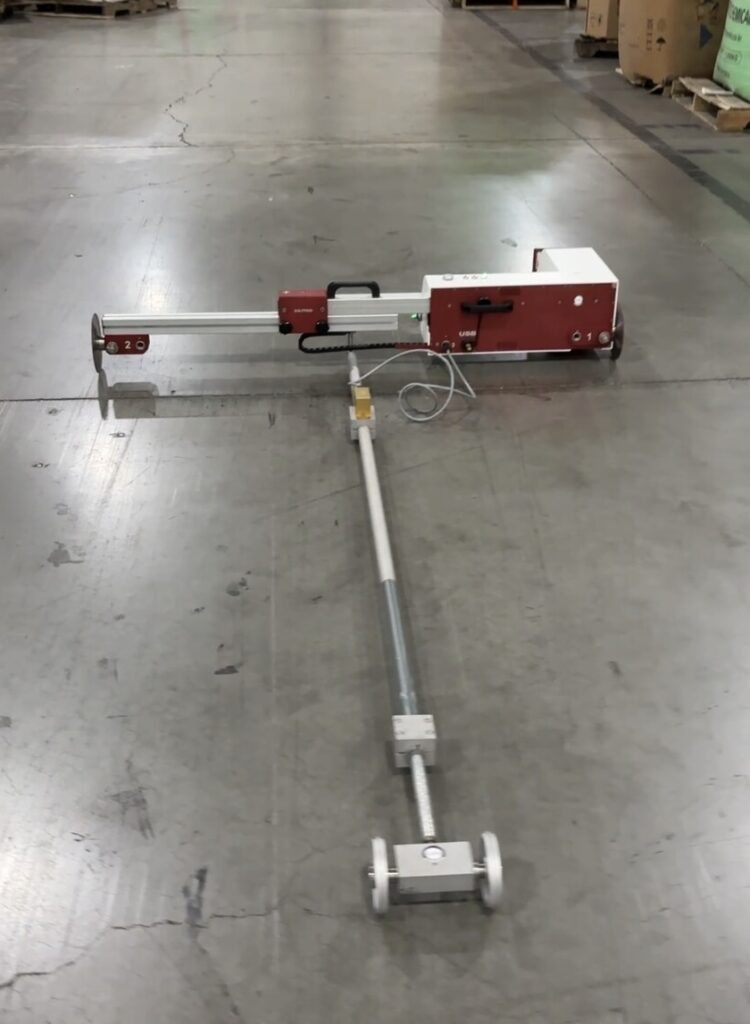
TR34: Free Movement and Defined Movement under one framework
TR34 — Concrete Industrial Ground Floors, 4th Edition is widely used internationally and frequently appears on major warehouse and distribution projects. Its greatest strength is conceptual clarity.
TR34 separates: FM — Free Movement from DM — Defined Movement
FM applies where vehicles travel relatively freely across an area. DM applies where high-lift trucks follow known paths. TR34 also distinguishes shorter-range flatness from longer-range levelness. That makes TR34 extremely useful for buildings containing multiple operating environments.
A large distribution center may have:
- FM requirements in bulk storage;
- different requirements around docks;
- DM requirements in VNA aisles;
- separate OEM tolerances under automation equipment.
The mistake is assuming: TR34 DM2 = a certain FF number = a certain Fmin number. It does not work that way. TR34, ASTM and Fmin use different measurement philosophies and should not be treated as simple conversions.
VDMA: built around the reality of VNA trucks
The VDMA “Floors for use with VNA Trucks” guideline focuses on guided VNA trucks operating close to racking and often carrying loads or operators at significant elevation.
That makes it particularly relevant for sophisticated high-bay warehouse operations. VDMA considers several floor characteristics, including:
- transverse floor geometry;
- general flatness;
- levelness;
- floor interruptions;
- longitudinal behavior;
- Fx waviness.
Fx is particularly interesting. A floor does not need one giant bump to create a problem. A repeating series of smaller waves can affect how a high-lift truck behaves while traveling down an aisle. This is why VDMA cannot simply be replaced with a generic FF requirement. It examines floor behavior from the perspective of VNA operation.
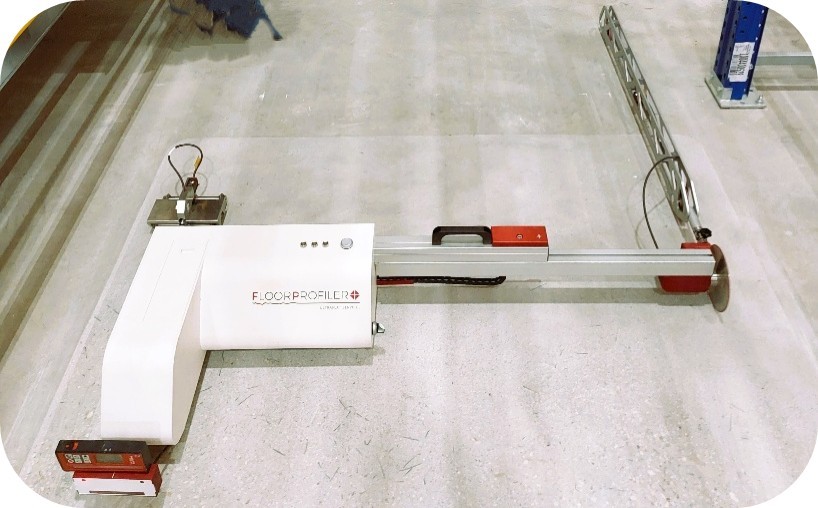
EN 15620: one of the most misunderstood references
This one deserves special attention. Many warehouse documents still contain:
“Floor shall comply with EN 15620.” But EN 15620:2021 is primarily a standard for racking tolerance, deformation, and clearance. The current Edition excludes floors, and the floor tolerances that appeared in the older 2008 edition were removed. So when you see EN 15620 in a floor document, the year matters enormously.
If you intend to use the older EN 15620:2008 requirements, treat them as edition-specific legacy requirements. “EN 15620 compliant floor” by itself is no longer enough information.
North America: Сoncrete compliance is not automation compliance
ACI, ASTM and CSA provide the fundamental North American framework for concrete construction, tolerances and testing. They remain essential.
But they do not know which automation system your warehouse will eventually operate. A perfectly acceptable conventional warehouse slab may later be asked to support:
40-ft VNA trucks. High-speed AMRs. Guided AGVs. AutoStore-type systems. ASRS or fixed robotic grids.
Each system interacts with the floor differently. That is why warehouse owners should separate two questions:
Is this a good concrete floor? and Is this floor suitable for my equipment?
Those questions are not always the same.
What warehouse owners should know before buying automation
You don’t need to become a floor engineer. But before signing off on a new automation or material-handling system, know these things:
- Exact equipment. Manufacturer, model, and configuration—not simply “VNA” or “AMR.”
- Maximum operating or lift height. A 15-ft application and a 40-ft application interact with floor geometry differently.
- Movement pattern. Random, defined path or fixed footprint.
- Supplier floor requirement. Ask the OEM or integrator for the actual current floor-compliance document.
- Required standard. ASTM FF/FL? Fmin? TR34 DM? VDMA? OEM-specific tolerance?
- Existing-floor condition. Especially when installing automation in a brownfield warehouse.
- Who is confirming compliance? The slab contractor, equipment supplier, integrator, and floor surveyor should be speaking the same technical language.
That last point matters. A floor can be ASTM-compliant but not VNA-compliant; it can be structurally adequate but geometrically unsuitable.