


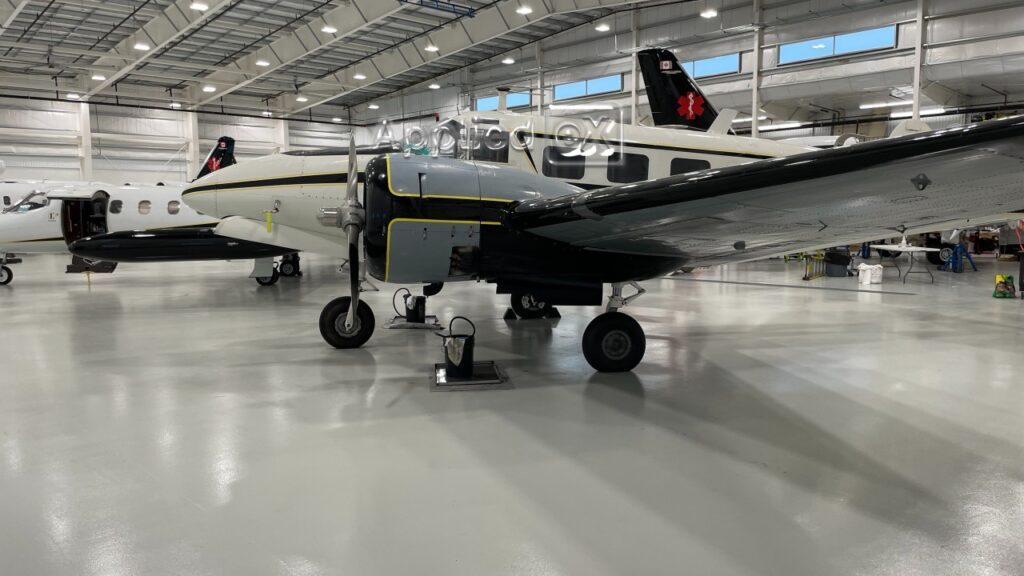
Aircraft hangars are some of the most demanding floor environments in the industrial world. Yet, floor selection is still too often reduced to a simple question: “What epoxy system can be installed for the lowest price?” That question misses the entire point. A hangar floor is not just a painted concrete slab. It is a working platform underneath aircraft, maintenance crews, tow tugs, forklifts, carts, dollies, fuel, hydraulic fluids, cleaning equipment, tire movement, open hangar doors, and constant operational pressure. Every day, the floor is asked to support safety, appearance, cleanability, durability, and uptime simultaneously.
That is why the right flooring decision cannot be made by comparing generic epoxy systems on a spreadsheet. We should approach this as a solution architecture. The floor system must be designed around how the hangar actually operates, where the highest-risk zones are located, which chemicals are present, how aircraft move, how quickly the facility must return to service, and what level of finish the owner expects to maintain years after installation.
In an aviation environment, the wrong floor does not fail quietly. It announces itself through tire staining, yellowing, surface wear, loss of gloss, poor cleanability, peeling, chemical attack, slippery or inconsistent texture, threshold breakdown, and eventually downtime.
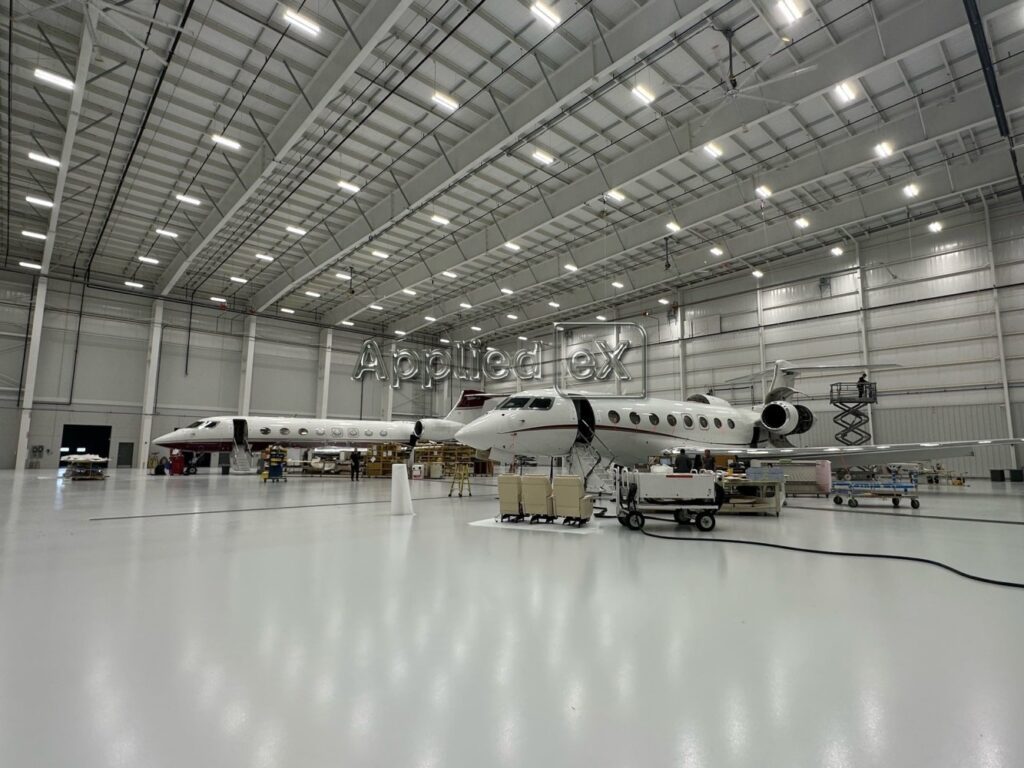
Part 1: The Hangar Environment Does Not Forgive Average Systems
The first and most important requirement is chemical resistance. Hangar floors are exposed to aviation fuels, including Jet-A and Jet A-1, as well as hydraulic fluids such as Skydrol. These are not mild exposures. They are aggressive, operational realities. A basic market-average epoxy system may look acceptable at turnover, but the true test begins when the floor is exposed to the chemicals of daily aviation work. A proven aviation-grade system must be selected with the understanding that chemical resistance is not an optional feature; it is one of the reasons the system exists.
The second requirement is resistance to tire staining and traffic wear. Aircraft tires, hot and cold rubber, ground support equipment, tow tugs, forklifts, carts, and dollies create repeated stress on the surface. A hangar floor that quickly shows tire tracking or surface degradation loses more than appearance. It becomes harder to clean, harder to maintain, and less aligned with the facility’s professional image. This is where the choice of topcoat becomes critical. A simple epoxy topcoat and an aliphatic urethane topcoat are not the same conversation. In aviation-grade systems, the topcoat is not decoration; it is the performance shield. It is the layer that takes the first hit from tires, chemicals, UV exposure, cleaning, and abrasion.
The third requirement is UV and colour stability. Hangar doors open. Natural light enters. In many facilities, large sections of the floor are exposed to periodic sunlight and thermal movement. Aromatic epoxy topcoats can yellow or amber under UV exposure, quickly compromising the appearance of a high-visibility aviation facility. A proven aliphatic urethane topcoat provides a much stronger solution for long-term colour stability and finish retention. This matters because a hangar floor is visible. It is part of the operation’s visual identity. When aircraft owners, pilots, maintenance teams, auditors, clients, and visitors enter the hangar, the floor helps define the first impression of the facility.
Another major requirement is controlled slip resistance without sacrificing cleanability. This balance is one of the most misunderstood parts of hangar flooring. A floor cannot be so smooth that it creates safety concerns for maintenance crews, especially around fluids and active work zones. At the same time, it cannot be so aggressively textured that it becomes difficult to clean or traps dirt, rubber, and contaminants. The right traction profile must be engineered into the system. A high-performance urethane topcoat with a controlled-texture additive, such as glass-bead technology, can create a surface that supports traction, durability, and cleanability. This is exactly the type of balance that separates a real aviation floor system from a generic industrial coating.
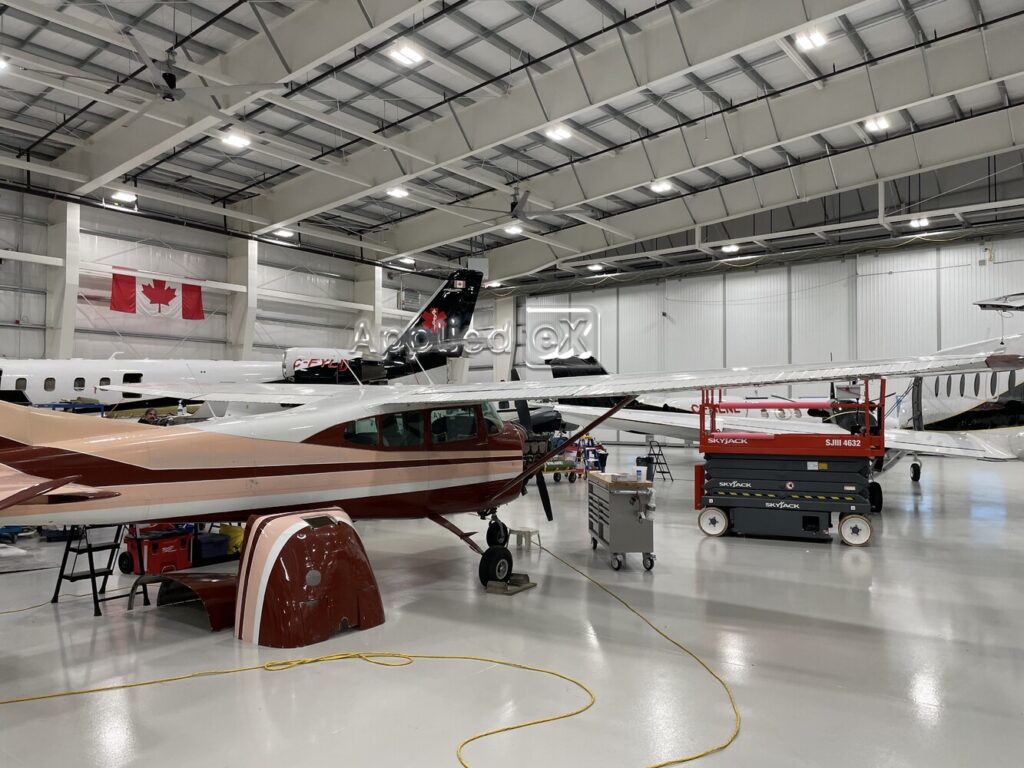
Part 2: Real Performance Comes From System Architecture, Not Just Thickness
Impact and point-load resistance are critical because hangars are not evenly loaded environments. Some areas experience normal aircraft parking and maintenance traffic, while others take the brunt of concentrated punishment. Entrances and thresholds deal with door cycling, thermal movement, weather ingress, UV exposure, and tight-turning tow traffic. Aircraft wheel stop areas experience concentrated point loads from the landing gear. High-use equipment paths take repeated mechanical abuse. Treating all zones the same may simplify the proposal, but it does not respect the reality of the operation.
A smarter approach is zone-based system architecture: general areas can receive a proven high-build epoxy/urethane system, while high-risk areas may justify a premium build with additional epoxy body coat thickness for greater chemical barrier depth, impact resistance, and long-term durability.
This is where the difference between system thickness and system intelligence becomes important. Thickness alone does not guarantee performance. An average-thickness epoxy system can still underperform if the chemistry, surface preparation, topcoat, cure profile, and operational fit are wrong. A properly designed hangar floor system considers the full build: moisture-tolerant primer, high-build epoxy body coat, aliphatic urethane topcoat, controlled texture, total dry film thickness, substrate conditions, joint treatment, and return-to-service requirements.
The strongest solution is not always the one with the biggest number on a data sheet. It is the one where every layer has a job and every job is aligned with the actual hangar environment.
Surface preparation is where quality finish begins, and failure is prevented. No premium coating system can overcome poor preparation. In renovation work, the existing coating must be removed properly, the concrete must be opened to the correct profile, and the substrate must be prepared for mechanical bond. Mechanical diamond grinding is often a highly controlled method for hangar renovations because it can remove existing epoxy coatings, reduce the risk of over-scarifying or damaging the slab, and create a clean, open-pore surface suitable for primer penetration and adhesion.
This is not simply “prep work.” It is the foundation of the entire system. A beautiful finish installed over a compromised surface is not a premium floor; it is a future failure with a glossy beginning.
The concrete itself also has to be respected. Moisture conditions, contaminated areas, existing cracks, control joints, expansion joints, spalling, slab movement, fuel saturation, oil contamination, temperature, humidity, ventilation, and access limitations all influence the final performance. These issues cannot be ignored or buried under a coating. A responsible decision-making process must include moisture testing, substrate review, joint and crack evaluation, environmental assumptions, and clear exclusions. When these items are not addressed before installation, they usually return later as warranty disputes, early failures, or costly change orders. In hangar flooring, the hidden details are often the ones that decide whether the finish survives.
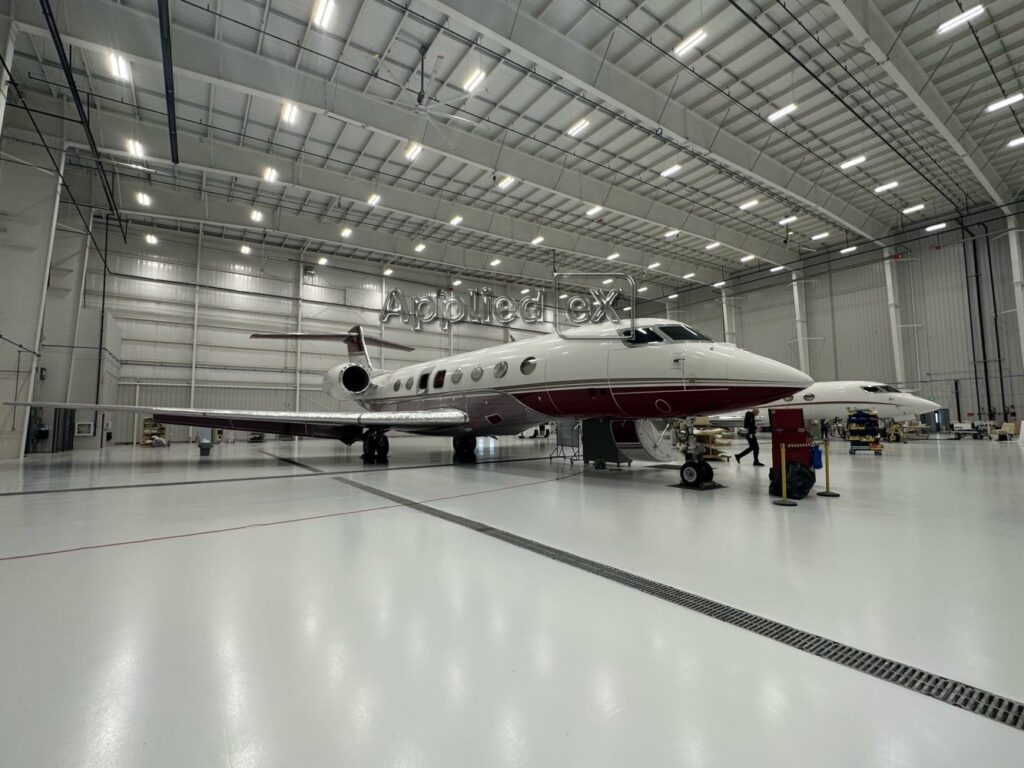
Part 3: The Real Decision Is Risk, Uptime, and Long-Term Confidence
Return-to-service planning is a major part of the system choice. Active aviation facilities cannot shut down casually, and a floor that looks finished is not necessarily ready for full use. Light foot traffic, carts, rubber-wheeled equipment, forklifts, tow tugs, aircraft parking, taxiing, and full chemical exposure all require different cure milestones. Full chemical resistance develops over time after the final coat. This matters because putting the floor back into heavy service too early can damage the system before it reaches full performance.
A quality installation is not complete when the final coat is rolled. It is complete when the system has cured properly, the owner understands the use limitations, and the floor is returned to service in a controlled way.
For decision makers, the real comparison is not “epoxy versus epoxy.” The real comparison is between average and proven, shortcuts and architecture, appearance at turnover and performance under pressure. A market-average two-coat epoxy-only system may appear competitive on day one, but the hangar will expose its weaknesses over time. Epoxy-only topcoats are more vulnerable to UV yellowing, tire marking, and reduced performance under aviation chemical and thermal cycling conditions. Proven epoxy/urethane aviation systems with the right topcoat chemistry, film build, texture, and preparation offer a more complete answer because they are designed around the environment rather than forced into it.
The finish matters because it reflects the facility, but finish quality is not only about gloss. A quality finish is uniform, durable, cleanable, slip- and chemical-resistant, UV-stable, and properly bonded to the substrate. It should improve light reflection, make maintenance easier, help identify spills or debris faster, and give the entire hangar a higher level of professionalism. It should look like it belongs under aircraft. More importantly, it should continue looking that way after the facility starts using it.
This is what makes the decision a no-brainer. If the floor must resist fuel, hydraulic fluids, tire staining, UV exposure, impact, abrasion, point loading, cleaning cycles, and heavy equipment traffic, then it should not be built as a basic coating. If the facility needs safe traction and easy cleanability, then the texture must be engineered, not guessed. If the hangar has threshold zones, wheel stop areas, and high-use traffic paths, the system should be designed by zone rather than averaged across the slab. If downtime matters, cure windows and return-to-service must be part of the plan. If long-term appearance matters, the topcoat chemistry must support it. If failure is unacceptable, the system selection must go beyond the lowest initial price.
Aircraft hangars deserve floors that are chosen with the same seriousness as the operations they support. The right system protects the slab, the aircraft environment, the maintenance team, the schedule, the brand image, and the facility’s long-term investment. The wrong system may save money at installation, but it shifts risk back to the owner in the form of repairs, disruption, staining, premature wear, recoating, and loss of confidence.
A hangar floor should not become the weak link in an aviation operation. It should quietly carry the weight of the mission every day: strong under aircraft, safe under crews, clean under lights, resistant under chemicals, and reliable under pressure.
That is the standard.


