



When AutoStore systems perform exactly as intended—quietly, efficiently, and relentlessly—it is tempting to focus on robots, software, and grid engineering. Yet the most critical performance component is also the least glamorous: the floor.
Unlike traditional automation, AutoStore places bins directly on the concrete slab. There are no wheels, rails, or isolation layers to mask imperfections. Every millimeter of deviation translates directly into the grid geometry and the robot’s behavior. For floor owners and integrators, that reality fundamentally changes what “good enough” means.
In AutoStore environments, the floor is a precision element of the automation system, not simply a structural substrate.
Defining Precision: What the Numbers Actually Mean
AutoStore defines floor performance through three measurable surface characteristics that must be controlled simultaneously: flatness, levelness, and deviation from a datum plane. Each captures a different physical behavior of the slab, and none can be ignored without consequences.
Flatness governs short‑range variation—how a bin seats and how consistently the grid feet bear load. Levelness captures long‑range behavior across the grid, directly affecting track alignment and robot travel. The datum defines the total elevation envelope across the entire installation footprint.
The tolerances are explicit:
- Flatness (Property A) ±3.5 mm measured over a 1.2 m gauge ±5.5 mm measured over a 2.4 m gauge
- Levelness (Property B) ±4.5 mm over 1.2 m ±6.0 mm over 2.4 m
- Deviation from Datum (Property C) ±20 mm across the entire AutoStore floor area
Importantly, any single point exceeding these values makes the floor non‑compliant. This is not a statistical or percentile‑based standard—there is no allowance for “95% compliance.”
Why These Tolerances Matter Operationally
AutoStore bins are stacked up to 25 units high, depending on bin size, so small inconsistencies at the slab level can be magnified vertically. A bin seated unevenly on the floor can gradually deform, leading to retrieval errors, gripping faults, or system slowdowns.
At the grid level, uneven support leads to local deflection and accelerated wear in aluminum and steel profiles. Over time, this translates into track misalignment, increased maintenance, and reduced system reliability. The floor does not fail catastrophically—it quietly erodes performance.
Joints: The Silent Performance Risk
Across global installations, joint curling is the most frequent cause of AutoStore floor non‑compliance—and it often occurs on floors that pass conventional industrial standards. AutoStore permits joints, cracks, and even surface imperfections—but only within strict limits:
- No step, ridge, or mound may exceed 2 mm
- Joint widths must remain ≤ 20 mm
- Vertical differential movement across joints is not permitted
- Cracks ≤ 2 mm are acceptable if stable and non‑progressive
Because over 75% of concrete shrinkage occurs within the first 90 days, installation timing matters. Installing the grid too early locks in movement that later manifests as non‑compliance. Allowing the slab to cure—and designing joints with final behavior in mind—is one of the most effective ways to preserve long‑term performance.
Measurement as Active Control, Not Documentation
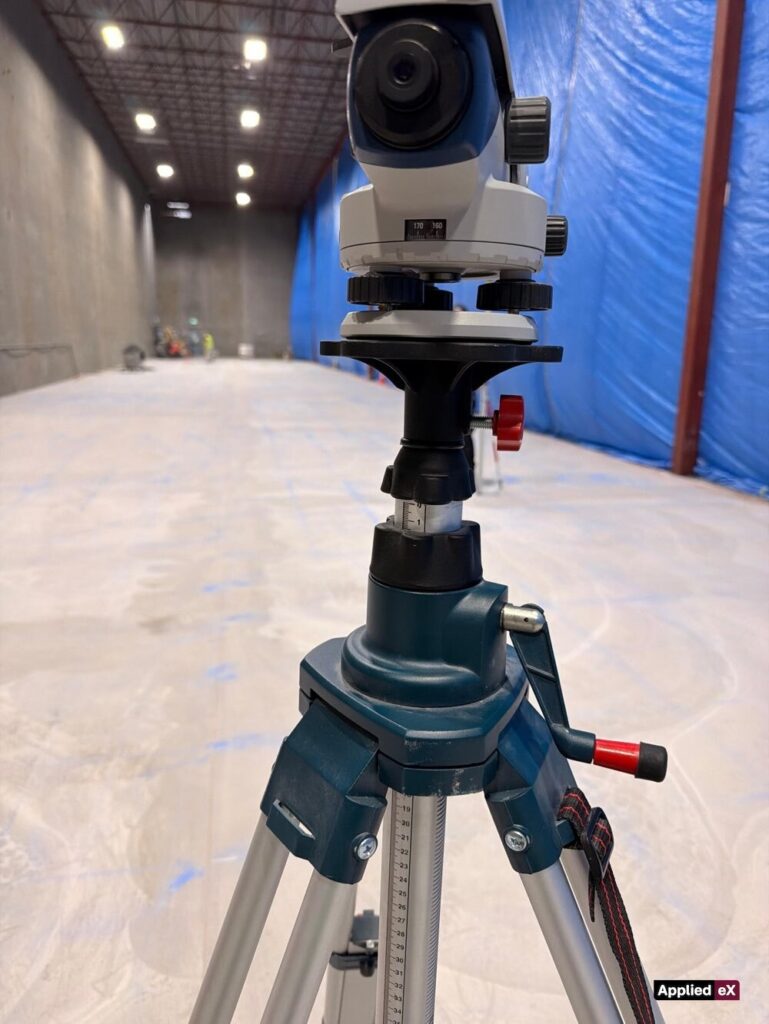
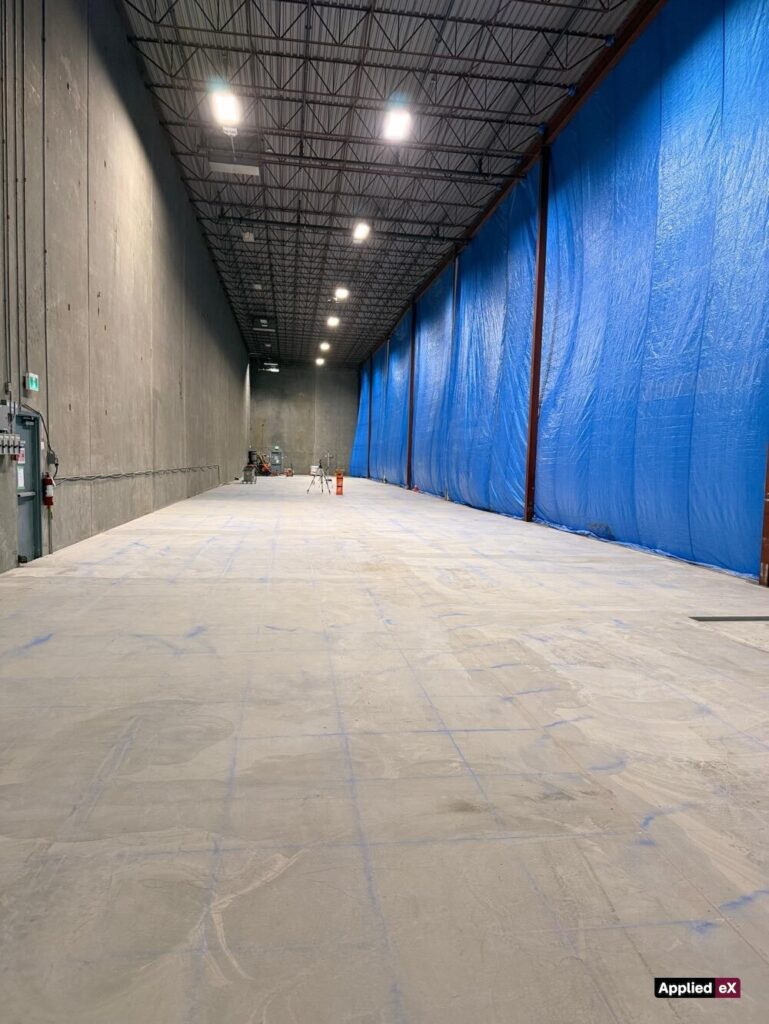
Compliance cannot be assumed; it must be proven. AutoStore requires measurement equipment with an accuracy of ±1 mm or better, regardless of method. Traditional floor profilers and laser leveling tools remain valid, but on large systems, they reveal only isolated slices of the slab. This is where 3D laser scanning becomes transformative.
AutoStore has validated 3D scanning as an acceptable surveying method when accuracy, point density, and scanner placement are controlled. Properly executed scans create a complete surface map rather than selective lines or grids.
This enables teams to:
- Identify localized high and low zones with millimeter precision
- Understand joint behavior across entire grid footprints
- Model remediation before field work begins
- Establish a digital baseline for future inspections or expansions
Used proactively, scanning stops being a remediation tool—and becomes a process control instrument.
What Floor Owners and Integrators Ultimately Need
The real deliverable is not concrete—it is predictability.
Owners need assurance that their automation investment will perform reliably for decades. Integrators need confidence that the grid they assemble will install cleanly, commission smoothly, and operate without chronic intervention.
Precision flooring for AutoStore delivers:
- Controlled geometry under load
- Verified compliance at the millimeter scale
- Reduced installation risk
- Long‑term operational stability
In AutoStore, the robots may do the visible work—but the floor decides how well the system lives up to its promise.
Note: This will be the final newsletter published on this page. All future articles and updates will be released on our new AppliedeX page. We look forward to sharing a dedicated newsletter hub with you soon—stay tuned.


