


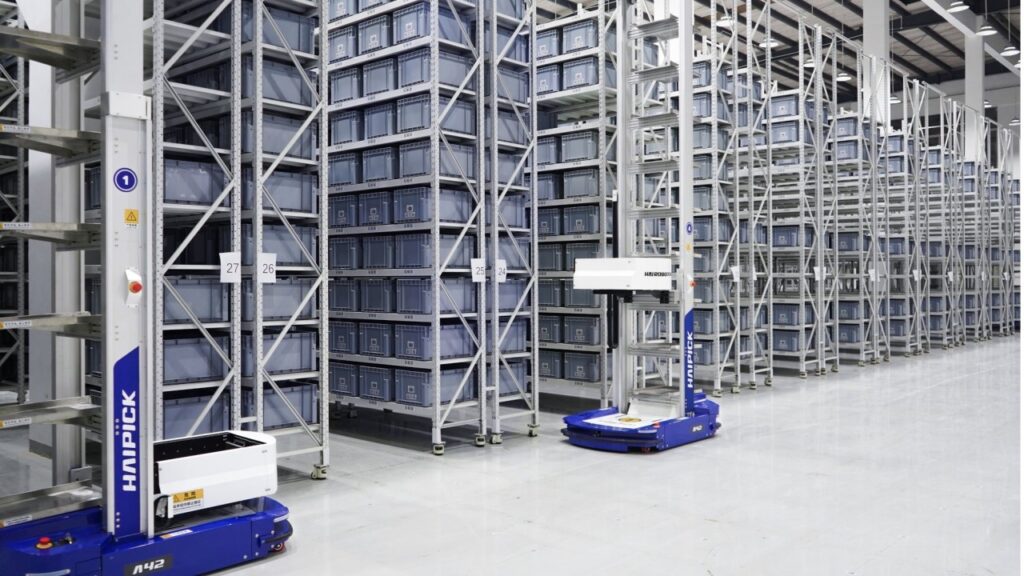
When a customer invests in warehouse automation, the objective is rarely just to install robots. The real priorities are operational:
- Achieve the planned throughput.
- Maintain consistent robot speeds.
- Reduce commissioning delays.
- Protect equipment from unnecessary wear.
- Minimize maintenance and downtime.
- Create a safe, dependable system that performs as designed.
For HAI Robotics installations, these outcomes depend heavily on something that can easily be underestimated: the concrete floor.
A robot may be equipped with advanced navigation, control, and sensing systems, but it still interacts physically with the building through its wheels. Every joint, crack, slope, patch, and localized floor irregularity can influence movement, positioning accuracy, and long-term reliability.
HAI Robotics specifically warns that a noncompliant floor may cause robots to skid, deviate, wobble, travel at reduced speed, or experience issues with picking and positioning. In severe cases, floor conditions may contribute to contact with racks, equipment damage, or safety concerns.
That is why the floor should not be treated as a cosmetic element of the construction. It should be evaluated as a critical component of the automation system.
Start With the Customer’s Operational Needs
The first question should not be:
“How flat is the floor?”
The better question is:
“How will the robots use this floor?”
A compliant floor cannot be designed or remediated properly without understanding the automation layout, robot models, picking heights, wheel geometry, travel directions, and operating zones. HAI systems may include two fundamentally different movement conditions.
Defined-Movement Areas
In defined-movement, or DM, areas, robots follow predetermined routes. The floor must therefore be evaluated along the actual wheel paths. The critical issue is not only the general elevation of the slab. It is the relationship among the robot’s wheels as it moves forward.
The survey must consider:
- The elevation difference between the left and right wheel tracks.
- Changes in that elevation difference over short distances.
- Longitudinal differences between the front and rear wheel positions.
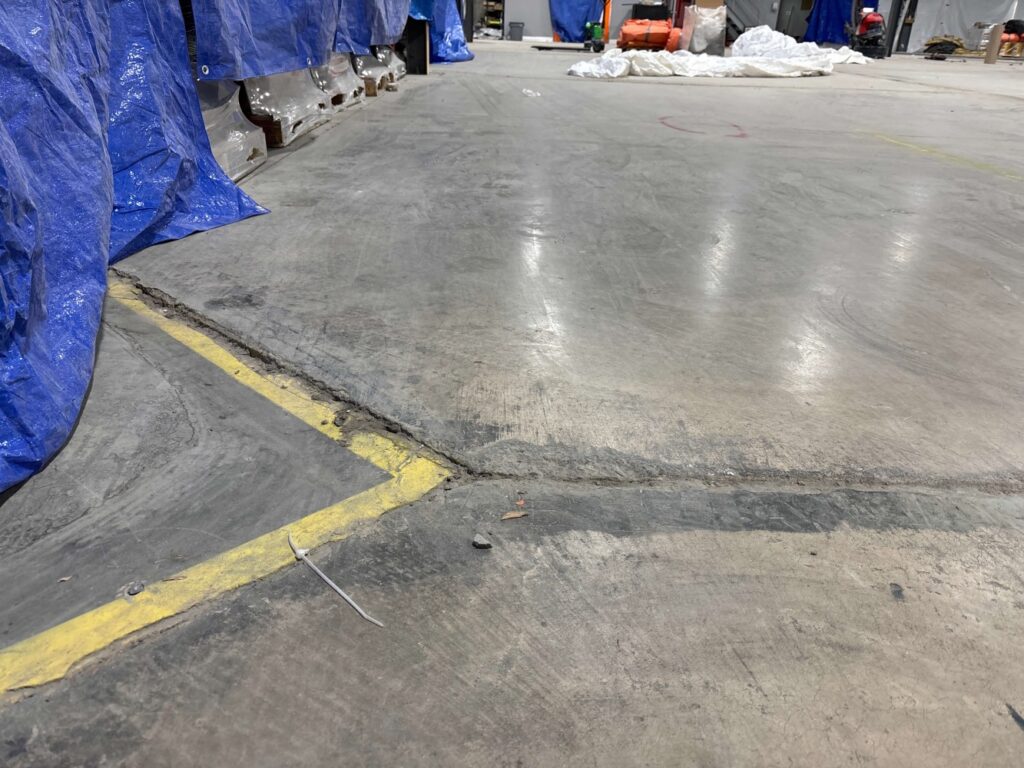
- Sudden changes caused by joints, cracks, repairs, or localized settlement.
A floor may appear visually smooth and still fail these requirements.
Free-Movement Areas
In free-movement, or FM, areas, robots may approach from multiple directions. These areas can include main roads, transfer zones, charging zones, and, depending on the system, areas under or between racks. Because the travel direction is known, the floor must perform consistently across the full operating surface—not only along selected aisle wheel tracks.
This requires a broader evaluation of:
- Local surface regularity.
- Changes in elevation across the floor.
- Joint transitions.
- Deviation from the intended datum.
- Slopes and localized depressions.
- Transitions between repaired and original concrete.
A successful project must satisfy both movement conditions where they exist.
Compliance Begins With Accurate Data
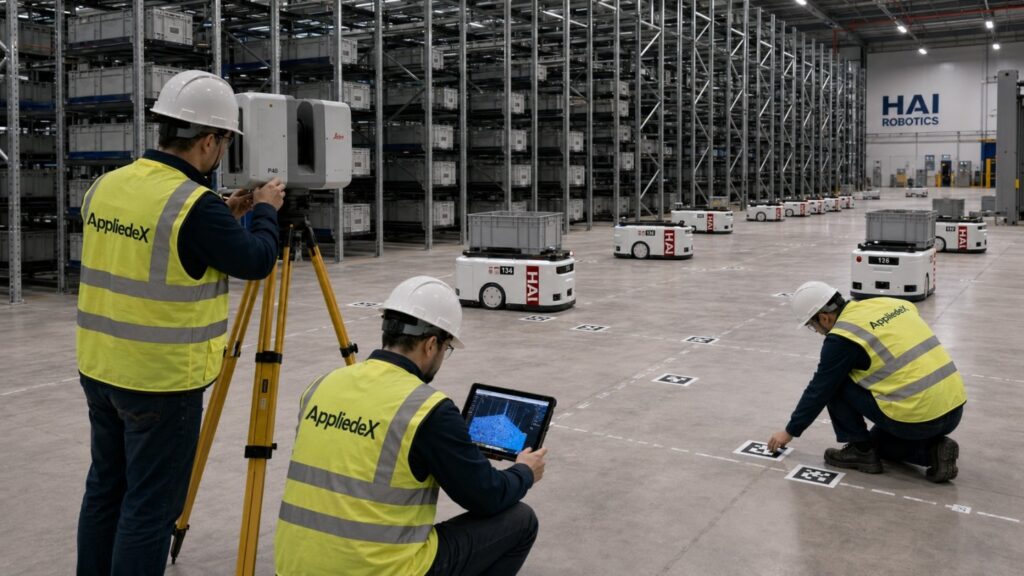
Concrete floor remediation should not begin with grinding equipment. It should begin with measurement. Traditional visual inspections and straightedges can help identify obvious defects, but they do not provide enough information to engineer a large, high-tolerance robotic floor. A professional assessment may require several complementary technologies.
High-Density 3D Scanning
A high-definition 3D scanner can capture millions of points across the floor surface. This creates a detailed digital representation of the slab and helps identify:
- Curling at construction and control joints.
- Slab-panel rotation.
- Settlement and deflection.
- High and low areas.
- Long slopes across the building.
- Failed patches and irregular transitions.
- Areas where cracking has changed the floor profile.
The value of 3D scanning is not simply the volume of data collected. The value comes from analyzing that information in relation to the proposed automation layout. This allows the customer’s budget to be focused where it creates the greatest operational return.
Ultra-Precise Profilograph Testing
Defined robot paths should be measured with specialist digital profilograph equipment capable of evaluating the relationship between the wheel tracks.
On our projects, profilographs with a resolution of approximately 0.01 mm are used to identify small but operationally significant changes in floor geometry.
The HAI technical requirements call for continuous or semi-continuous defined-movement measurements, with data intervals not exceeding 50 mm. The results must then be analyzed and graphically related to the automation layout, with noncompliant sections clearly identified.
For the customer, this creates a clear and traceable process: Measure → Analyze → Correct → Re-measure → Certify
Free-Movement and Datum Surveys
Free-movement floors require a different survey strategy. Under the TR34 methodology referenced by HAI Robotics, level readings are taken across a controlled grid, typically spaced approximately 3 meters apart.
The analysis evaluates both:
- Changes in elevation between adjacent locations.
- Short-distance changes in surface regularity.
Joint transitions must also be assessed because a floor can perform well between joints while still creating significant wheel impact at the joint itself.

Remediation Must Address the Cause, Not Only the Symptom
Once the data is analyzed, the remediation plan should distinguish between structural deterioration and geometric noncompliance.
A floor may require a combination of:
- Crack repair and stabilization.
- Joint-edge reconstruction.
- Replacement of delaminated or spalled concrete.
- Correction of failed previous patches.
- Treatment of separated expansion joints.
- Reprofiling of displaced slab panels.
- Precision grinding of high areas.
- Engineered filling of localized low areas.
- Smoothing of transitions between repaired and existing surfaces.
Grinding alone cannot solve every problem.
If a slab section is loose, delaminated, or structurally unstable, it must be repaired first. Similarly, placing repair material indiscriminately over low areas can create new transitions that are worse than the original defect.
The remediation design must consider how every repair will interact with the robot’s wheelbase.
Precision Grinding Is an Engineering Process
Conventional concrete grinding focuses primarily on removing surface material. Automation-floor grinding is different. The objective is to establish a controlled geometric relationship among the robot’s wheels.
Before grinding begins, the team must determine:
- Where material should be removed.
- How much should be removed?
- The required length of each transition.
- How the correction will affect adjacent areas.
- Whether the grinding improves both transverse and longitudinal performance.
- Whether the correction creates a new problem for free-moving equipment.
The initial scan and profilograph data are converted into a grinding plan. After each stage, the corrected paths are measured again.
This closed-loop process continues until the required classification is achieved.
Other Requirements Cannot Be Ignored
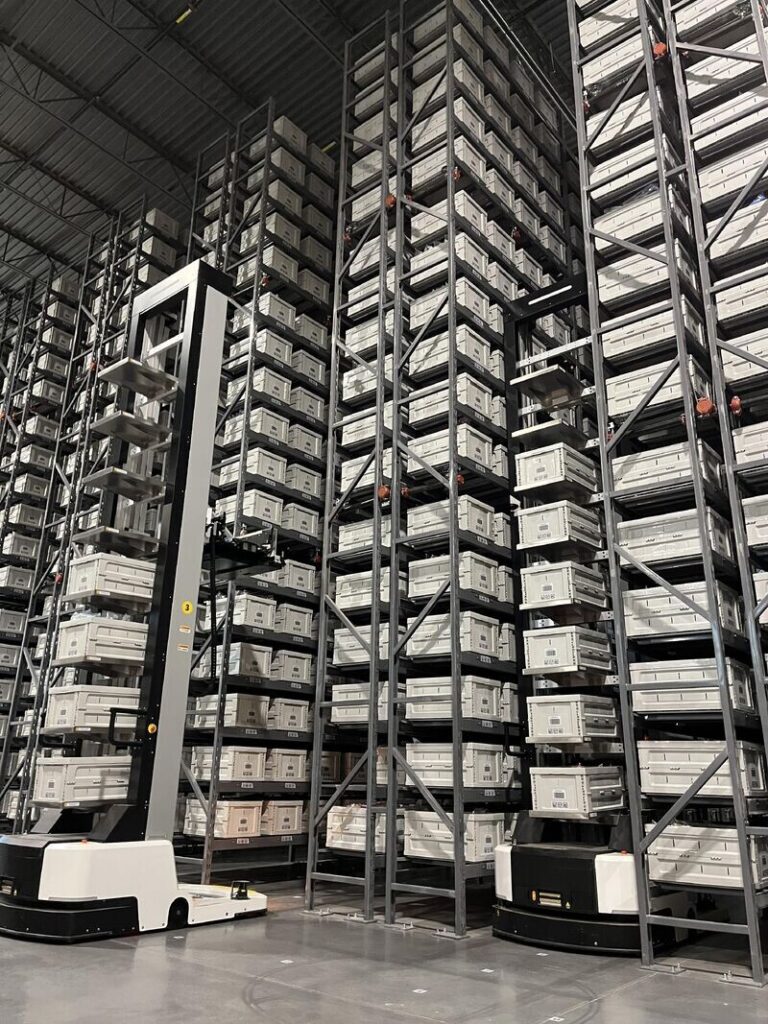
Flatness is one of the most visible requirements, but it is not the only one. A complete floor assessment should also consider:
- Concrete strength.
- Surface hardness and abrasion resistance.
- Coefficient of friction.
- Floor moisture.
- Overall slope.
- Step heights.
- Joint and groove widths.
- Floor thickness.
- Load capacity.
- Water and moisture resistance.
- Differential settlement.
A floor may meet its geometric tolerance on the day of commissioning but still create operational problems if the surface deteriorates, produces dust, loses traction, or continues to move.
The Customer Does Not Need a Flatter Floor. The Customer Needs Better Automation Performance.
The purpose of high-tolerance flooring is not to achieve an impressive number on a survey report. The purpose is to support the customer’s business. A compliant HAI Robotics floor can help provide:
- More consistent robot speeds.
- Smoother movement across joints.
- Reduced vibration and wheel impact.
- Improved positioning accuracy.
- Faster commissioning.
- Lower maintenance requirements.
- Reduced risk of premature equipment wear.
- Greater confidence in long-term system performance.
When the floor is evaluated early, measured accurately, and remediated based on the actual robot movement, even a severely deteriorated existing slab can be transformed into a reliable automation platform.
The floor is not simply beneath the automation. It is part of the automation.


