



Automation is transforming the material handling industry in North America. As warehouses, manufacturing plants, and distribution centers increase efficiency, Automated Guided Vehicles (AGVs) are becoming a crucial part of the equation. However, the performance of these high-tech machines depends on one often-overlooked factor—floor tolerances.
Why Floor Quality Matters for AGVs
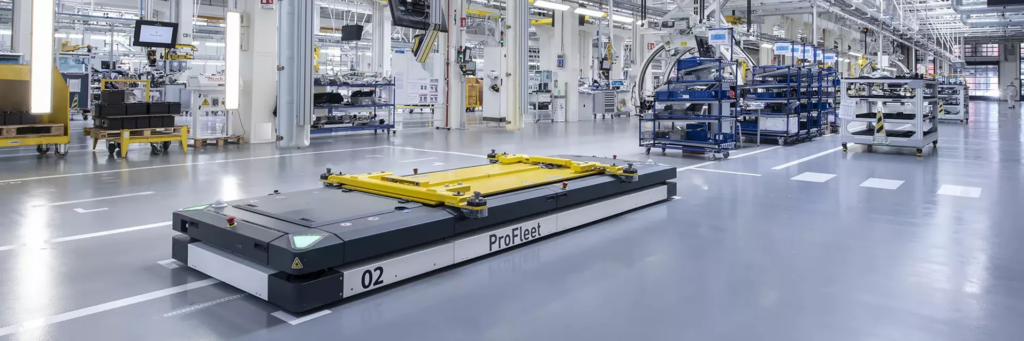
Unlike traditional forklifts or manually operated equipment, AGVs rely on precise navigation, sensors, and smooth surfaces to operate at peak efficiency. Irregularities in the floor surface can lead to:
- Navigation errors – AGVs follow laser guidance, magnetic strips, or vision-based navigation, all requiring predictable movement conditions.
- Excessive wear and tear – Uneven floors create unnecessary vibrations that shorten the lifespan of AGV components.
- Reduced operational speed – Poor floor conditions force AGVs to slow down, reducing productivity.
- Increased maintenance costs – Frequent misalignment or unexpected stops demand higher maintenance efforts and system recalibration.
Industry Standards for AGV-Ready Floors
Concrete floors must meet stringent tolerance requirements to ensure high-precision and uninterrupted AGV operation. Some of the most relevant standards include:
- DIN 15185 – Specifies flatness and levelness criteria for warehouse floors designed for AGVs and other automated systems.
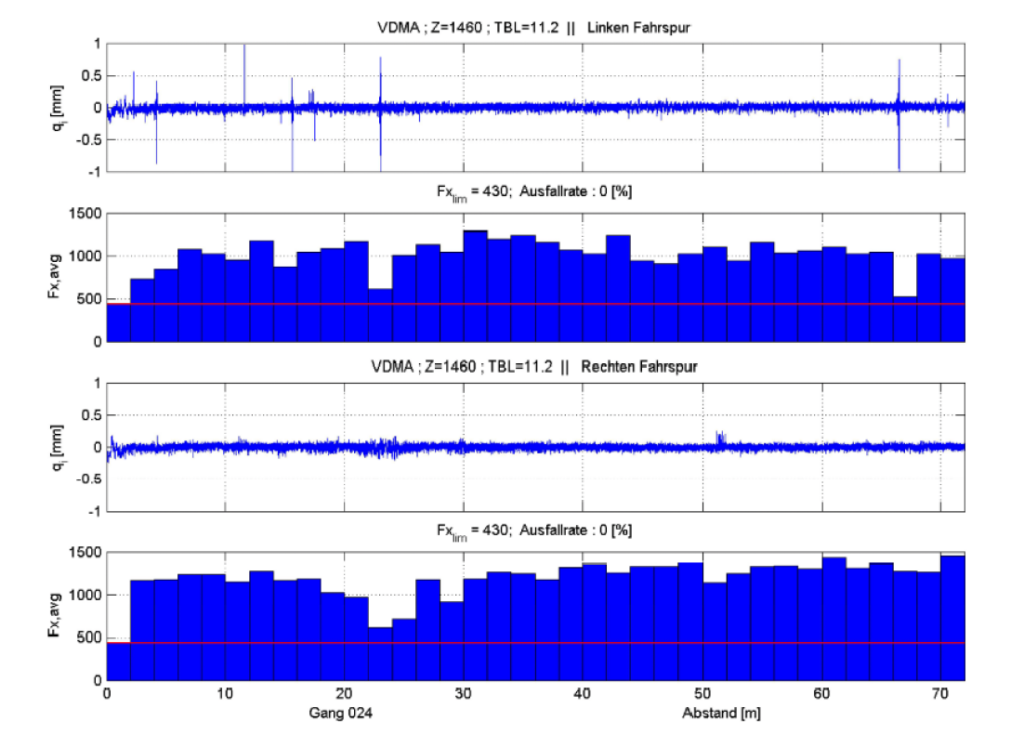
- VDMA Guideline – Offers recommendations on floor tolerances for automated warehouse operations in logistics and production.
- FEM 10.2.14-1 – Provides specifications for flatness to avoid system errors in high-density storage environments.
- TR34 – Defines super-flat floor tolerances required for VNA (Very Narrow Aisle) systems and AGV traffic.
These standards help establish precise flatness and levelness, ensuring minimal deviations that could impact AGV movement.
Key Floor Requirements for AGVs
To optimize AGV performance, concrete floors should meet:
- FF/FL (Floor Flatness & Levelness) Standards – Typically exceeding FF70/FL50 in free-movement areas and even higher (FF100/FL75) in AGV-dedicated zones.
- Maximum deviation per 3m straightedge – Should not exceed ±1.5mm for AGV paths.
- Jointless or Low-Profile Joints – Reducing impact and wear on AGV wheels and minimizing transition disruptions with a maximum differential height of ≤1.0mm.
- Polished or Epoxy Coatings – Enhancing surface smoothness and reflectivity for optical sensors, with surface roughness (Ra) below 30 μm.
- Load-Bearing Strength – Ensuring adequate compressive strength (e.g., 40-50 MPa) for supporting continuous traffic loads.
- Surface Hardness – Minimum 6 Mohs hardness scale for increased durability and resistance to AGV wheel abrasion.
Precision Grinding for AGV Floor Tolerances
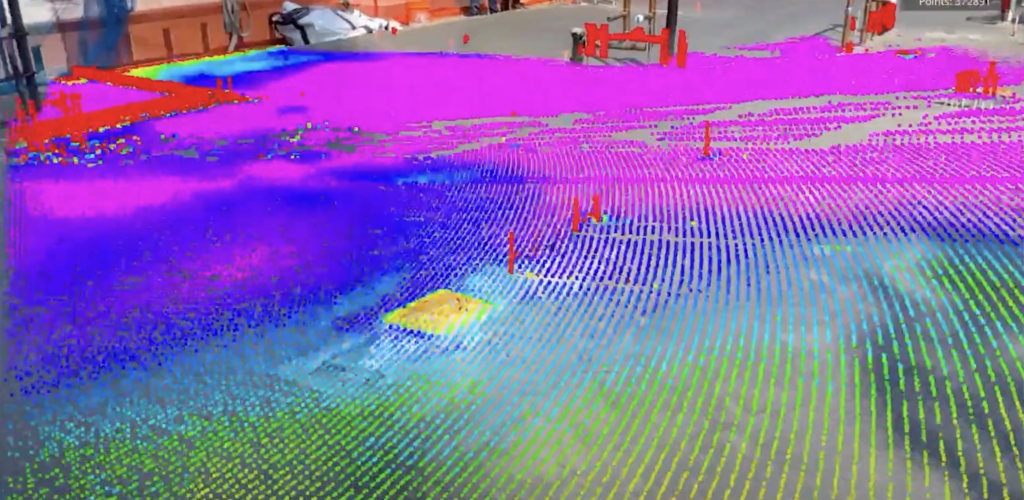
Achieving these stringent floor tolerances often requires precision or spot grinding to correct deviations and create an ultra-flat surface. We can achieve the required super-flat standards with millimeter-level accuracy using advanced grinding equipment. At AppliedeX, our concrete floor preparation and finishing expertise allow us to optimize warehouse floors for AGV systems, minimizing maintenance costs and maximizing operational efficiency. Whether it’s new construction or retrofit projects, our precision grinding solutions ensure that floors meet the highest standards for automation-driven facilities.
The Growing Demand for AGV-Ready Floors in Canada
With e-commerce, automotive, and logistics industries expanding their use of AGVs, AMRs (Autonomous Mobile Robots), and robotic forklifts, the need for adequately engineered floors is growing. Companies investing in super-flat, durable, and AGV-optimized floors are seeing fewer operational interruptions and maximizing their ROI on automation.
If your facility is considering AGV deployment, floor conditions should be a top priority from the design stage. We specialize in high-performance concrete flooring solutions tailored for AGV applications, ensuring the highest possible efficiency and longevity.
Are your warehouse floors AGV-ready? Let’s discuss how we can optimize your infrastructure for the future of automation!


