



Every automation system has its own sensitivity, but they all depend on the floor in one way or another.
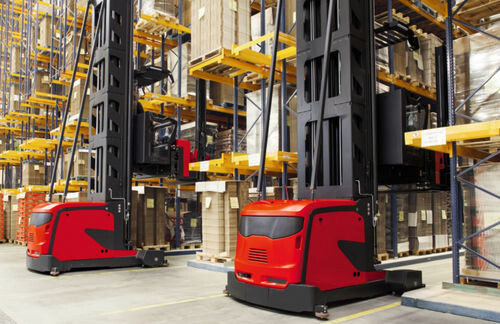
VNA Turret Truck and AGV Systems
Very Narrow Aisle systems are extremely sensitive to floor profile because small deviations at the wheel path are magnified at height.
A slight change in floor elevation can create noticeable mast sway. That can affect pallet positioning, rack clearance, operator confidence, wire guidance performance, and travel speed.
In a VNA aisle, the floor is not judged by the same standards as random warehouse traffic. It must be evaluated along the exact wheel paths.
A VNA floor problem can show up as:
- truck sway;
- rack impact risk;
- poor pallet placement;
- reduced lift height confidence;
- slower travel speeds;
- wire guidance issues;
- premature wheel wear and traction;
- vibration and sensor performance;
- safety concerns.
The higher the lift, the less forgiveness the floor has.
ASRS Systems
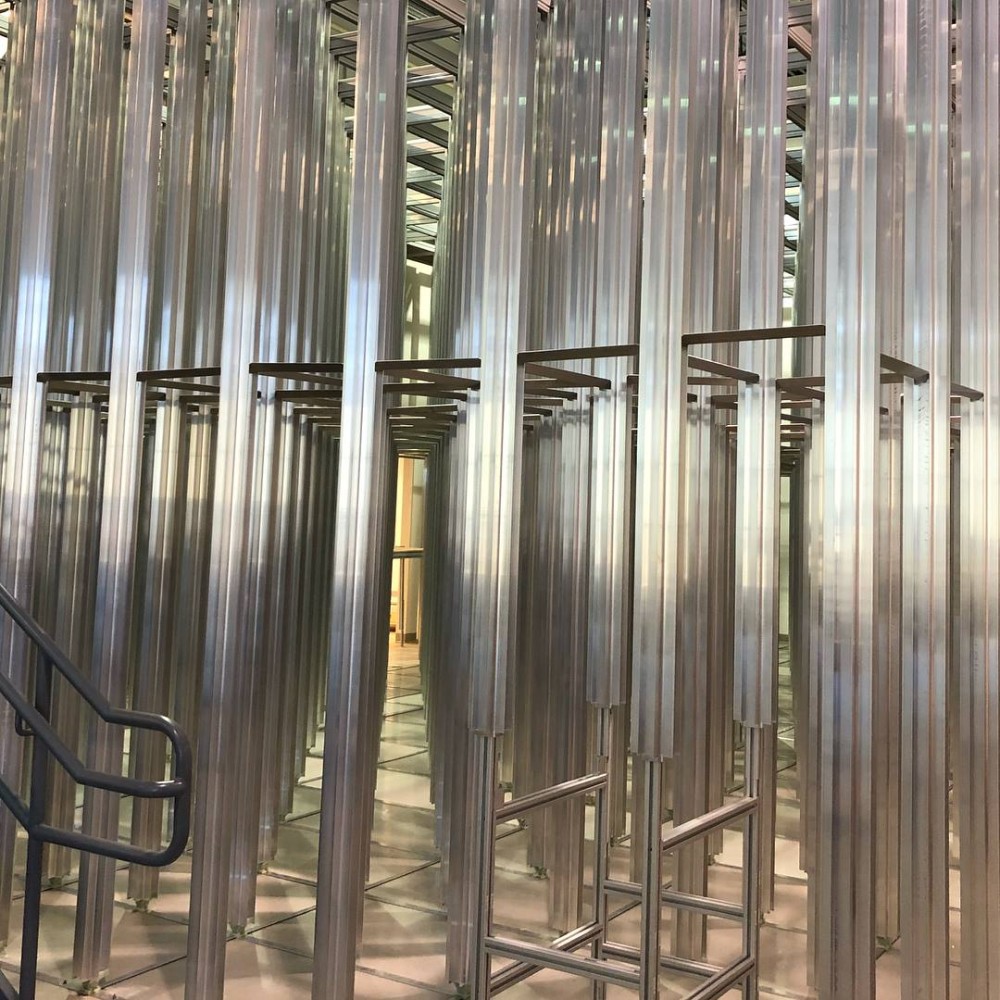
Automated Storage and Retrieval Systems rely on strict geometry.
Cranes, shuttles, rails, rack structures, and base plates all require stable alignment. If the slab is not flat, level, or structurally stable, the installation team may have to fight the floor from the first day.
Floor issues can create:
- base plate rocking;
- uneven column loading;
- rack out-of-plumb conditions;
- rail elevation problems;
- crane guide rail misalignment;
- shuttle vibration;
- accelerated wear;
- commissioning delays.
An ASRS system is a precision structure. If the base is wrong, the correction becomes more difficult with every vertical foot added above the slab.
AMR Systems
AMRs are more flexible than fixed-path AGVs, but they are not immune to floor problems.
An AMR can navigate around obstacles, but it cannot ignore physics. Slopes, uneven joints, loose repair materials, surface dusting, coating failure, polished low-friction zones, or abrupt transitions can still affect travel quality.
The result may be:
- localization errors;
- wheel slip;
- reduced travel speed;
- fault stops;
- payload instability;
- charging dock misalignment;
- higher maintenance;
- Inconsistent robot behavior in the same zone.
AMRs may be smart, but they still need a reliable surface.
The Survey Should Lead to a Repair Strategy
A common mistake is stopping at “pass” or “fail.” That is not enough.
A good automation floor survey should answer:
- Why did the floor fail?
- Is the issue flatness, levelness, datum, curling, joint width, or movement?
- Is the problem local or widespread?
- Is it structural or surface-related?
- Can it be corrected by grinding?
- Is slab stabilization needed?
- Is shimming possible?
- Is an industrial topping required?
- Will the repair affect the project schedule?
- Does the floor need to be re-surveyed after remediation?
This is where experience matters. The cheapest repair method is not always the most cost-effective method. A bad repair can create a second problem that is harder to fix than the first one.
Why Not Every Flooring Contractor Can Do This Work
This is an important point. Automation floor work is not the same as regular concrete repair.
A contractor may be excellent at coatings, polishing, patching, joint filling, or general slab repair and still not be the right contractor for robotic MHE compliance.
Automation floor remediation requires a different skill set:
- ability to read manufacturer tolerance specifications;
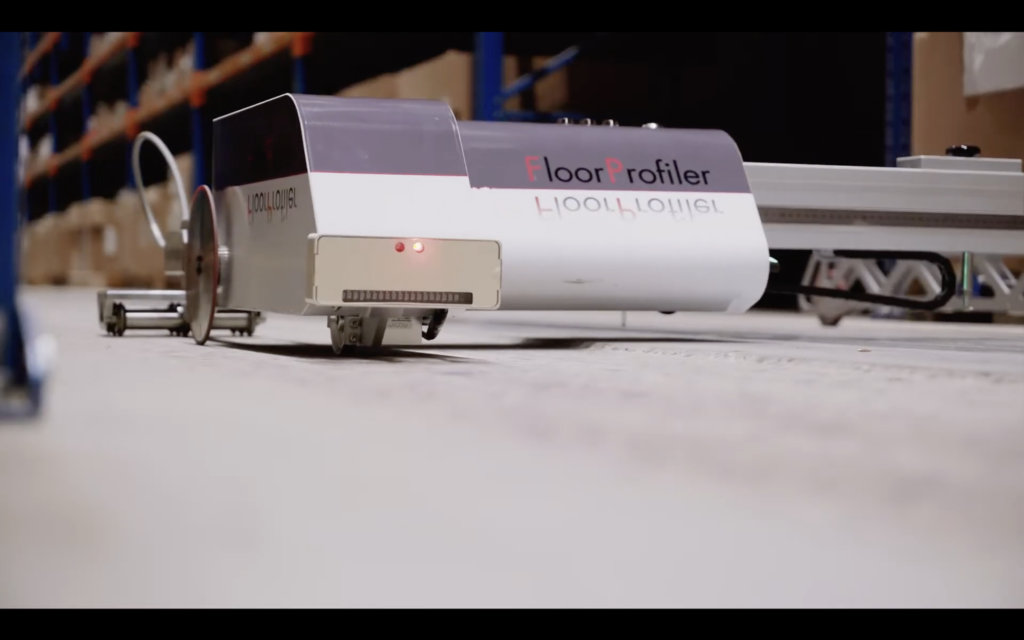
- proper survey equipment;
- experience with floor profiling;
- understanding of FF/FL limitations;
- knowledge of defined traffic tolerances;
- understanding of joint curling and load transfer;
- controlled grinding capability;
- proper repair material selection;
- ability to coordinate with integrators;
- post-repair verification;
- proven history in automation projects.
The question should not be, “Can you fix concrete?” The question should be, “Can you make this floor compliant for the automation system being installed?”
That is not the same question.


